Top 10 Fermented Foods for Gut Health and How to Eat Them
Fermented foods are a powerful tool to improve digestive health and balance the gut microbiota. Thanks to their high content of natural probiotics, enzymes, and bioavailable nutrients, they help strengthen the immune system, improve digestion, and reduce inflammation. Below are the top 10 fermented foods for gut health and how to incorporate them into your daily diet.
If you’re new to fermented foods, start with our Fermented Foods: Beginner’s Guide + Free 7-Day Gut-Healing Meal Plan.
10 Fermented Foods for Gut Health
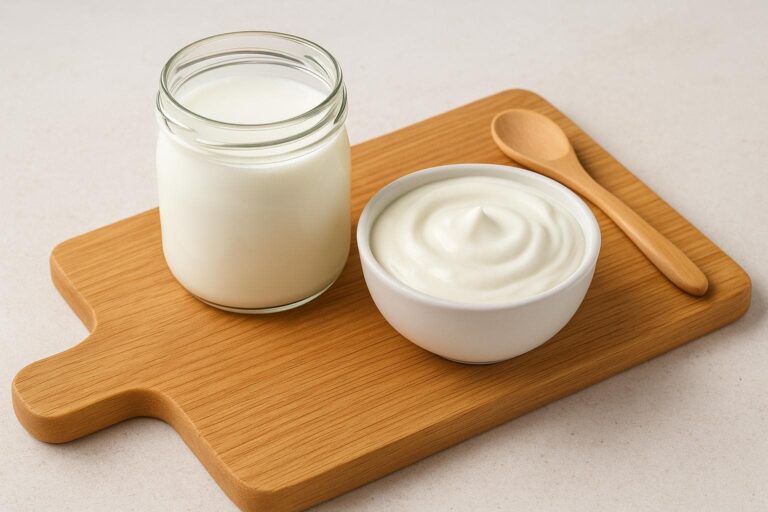
Plain Yogurt
Benefit: Rich in lactobacillus, it helps balance gut flora and improve lactose digestion.
How to eat it: Choose plain yogurt with no added sugar or flavorings. Enjoy it with fresh fruit, seeds, or in smoothies.
Recipe: Greek Yogurt With Berries
Kefir
Benefit: It contains more strains of beneficial bacteria than yogurt, making it a more powerful probiotic. Is one of the best fermented foods for gut health.
How to eat it: Drink it on its own, blend it with fruits, or use it as a base for dressings or cold soups.
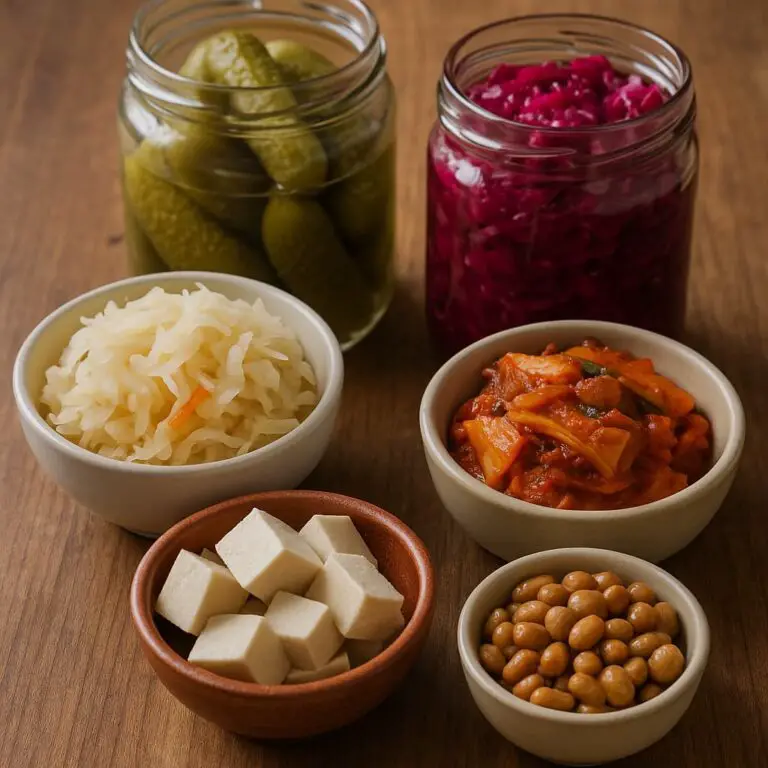
Sauerkraut
Sauerkraut is a traditional fermented cabbage dish, most commonly associated with German cuisine. The word “sauerkraut” literally means “sour cabbage” in German. It Is: Finely shredded cabbage that is fermented by lactic acid bacteria. Made by mixing cabbage with salt and letting it ferment naturally over days or weeks.
Health Benefits: Rich in probiotics that support gut health and digestion. Contains vitamin C, vitamin K, and beneficial enzymes. Can support the immune system and reduce inflammation.
How to Eat Sauerkraut: As a side dish or condiment (with sausages, sandwiches, or salads). On avocado toast or grain bowls. Avoid heating it too much, as high heat can destroy the live probiotics.
Benefit: High in lactic acid bacteria and vitamin C. Improves digestion and nutrient absorption.
How to eat it: Add it as a side to meals, in salads, or on avocado toast. Do not cook it, as heat destroys the probiotics.
Kimchi
Benefit: A spicy Korean ferment that provides probiotics, antioxidants, and anti-inflammatory compounds.
How to eat it: Pair it with rice, soups, wraps, or as a condiment in bowls and Asian dishes.
Miso
Benefit: Fermented soybean paste is rich in digestive enzymes and beneficial bacteria.
How to eat it: Dissolve it in warm water (don’t boil) to make miso soup or use it as a dressing for vegetables and marinades.
Tempeh
Benefit: Fermented soy is rich in protein and probiotics. Improves the digestibility of soy.
How to eat it: Steam it, sauté it, or marinate it as a meat substitute in tacos, salads, or bowls.
Natto
Benefit: Rich in probiotics and vitamin K2, essential for heart and bone health.
How to eat it: Traditionally eaten with rice, soy sauce, and green onion. Its sticky texture and strong flavor may be an acquired taste.
Fermented Pickles (Not Vinegar-Based)
Benefit: Provide live bacteria and enzymes that aid digestion.
How to eat them: Add them to salads, burgers, wraps, or enjoy as a snack. Make sure they are naturally fermented (check the label: no vinegar).
Kombucha
Kombucha is a fermented tea drink made by adding a colony of bacteria and yeast (called a SCOBY) to sweetened black or green tea. How to Drink Kombucha: Enjoy cold as a refreshing beverage. Drink 4–8 oz per day to start, especially if you’re new to fermented foods. Look for low-sugar and unpasteurized versions for maximum benefit. Komnucha is one of the most common Fermented Foods for Gut Health and easy to find in any grocery store.
Benefit: A fermented tea drink rich in organic acids and probiotics that promote gut balance.
How to drink it: Enjoy a glass a day between meals. Choose low-sugar, unpasteurized versions.
Aged Cheeses (Raw Milk)
Benefit: Some cheeses, like gouda, cheddar, or parmesan, naturally aged, contain beneficial bacteria.
How to eat them: Enjoy in small portions with fruit, in salads, or as a topping on hot dishes (without overheating).
To get the most out of fermented foods:
- Include them regularly, ideally daily, in small amounts.
- Avoid cooking them at high temperatures, as heat can destroy probiotics.
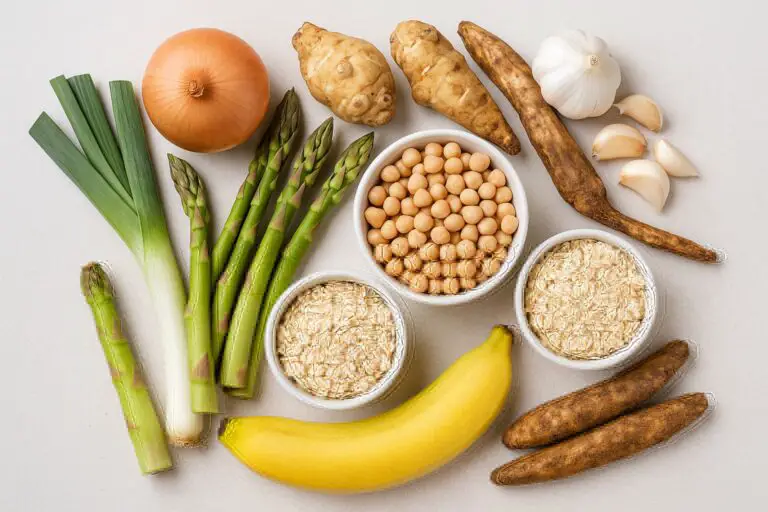
- Combine them with prebiotic fiber, such as fruits, legumes, or vegetables, to nourish the good bacteria.
Incorporating these Fermented Foods for Gut Health is a simple, delicious, and natural way to take care of your health.
If you’re new to fermented foods, start with our Fermented Foods: Beginner’s Guide + Free 7-Day Gut-Healing Meal Plan.
Want to learn more? Visit: The 8 Best Prebiotic Foods (FOS, GOS, Inulin) and How They Work
Fermented Foods for Gut Health & Mood: Recipes
The 8 Best Prebiotic Foods (FOS, GOS, Inulin) and How They Work
Sources
- International Scientific Association for Probiotics and Prebiotics (ISAPP)
- Harvard T.H. Chan School of Public Health – The Nutrition Source