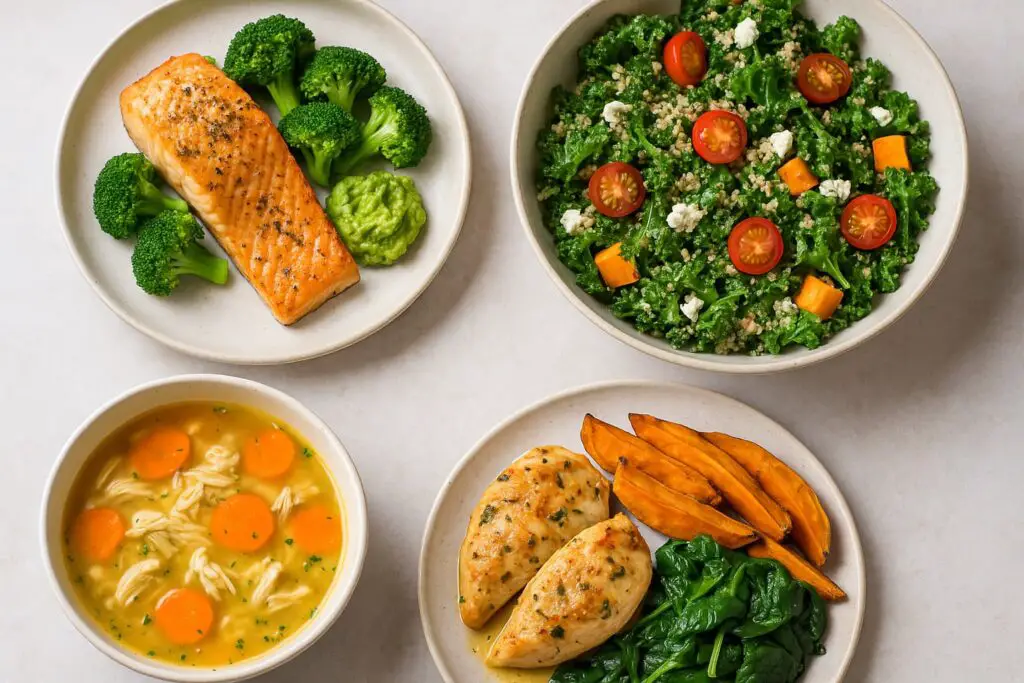
3 Day Meal Plan For IBS And Inflammation
A meal plan for IBS and inflammation can be crucial in managing symptoms, supporting digestion, and promoting overall well-being. When you’re living with IBS (Irritable Bowel Syndrome), IBD (Inflammatory Bowel Disease), or chronic inflammation, choosing the right foods becomes essential. Certain ingredients can trigger discomfort, bloating, or flare-ups, while others can help calm the gut, reduce inflammation, and support intestinal healing. This targeted meal plan focuses on anti-inflammatory, gut-friendly foods that are easy to digest and rich in nutrients. This Meal Plan For IBS And Inflammation emphasizes low-FODMAP options, cooked vegetables, lean proteins, and soothing herbs, and provides practical, delicious support for digestive balance and long-term health.
Meal Plan For IBS And Inflammation
These recipes are part of a broader anti-inflammatory living approach that combines food, habits, and lifestyle choices.
Day 1
Breakfast: Overnight oats with chia & banana. Rolled oats (gluten-free), chia seeds, lactose-free milk or almond milk, ½ banana (sliced), pinch of cinnamon. Soothing, prebiotic-rich, and easy to digest.
Lunch: Baked salmon with mashed sweet potato and steamed zucchini. Rich in omega-3s, low FODMAP, and anti-inflammatory.
Dinner: Turkey & rice soup with carrots and spinach. Bone broth base, lean turkey, white rice, carrots, spinach. Easy on the gut and rich in minerals. Add: Chamomile tea with ginger before bed. Calms digestion and reduces bloating.
Day 2
Breakfast: Smoothie (low-FODMAP) . Blueberries, spinach, lactose-free Greek yogurt, flaxseed, water or almond milk. Anti-inflammatory antioxidants + fiber.
Lunch: Grilled chicken quinoa bowl. Quinoa, grilled chicken, sautéed spinach, grated carrots, a drizzle of olive oil, and lemon juice. Read more about Health Benefits, Recipes, How To Prepare Quinoa
Dinner: Zucchini noodles with turkey meatballs. Zoodles sautéed lightly, homemade meatballs (low garlic/onion), tomato-free marinara (try roasted red pepper base). Add: Peppermint tea
Helps soothe IBS symptoms like cramping and gas.
Day 3
Breakfast: Scrambled eggs with sautéed spinach and sourdough toast (if tolerated). Cook with olive oil or ghee. Protein + anti-inflammatory greens.
Lunch: Lentil soup (if tolerated). Red lentils (easier to digest), carrots, zucchini, turmeric, and cumin. Fiber-rich and gut-nourishing. Use veggie broth. Check Best Red lentil soup Recipe & What To Serve With It
Dinner: White fish with mashed cauliflower and steamed green beans. Light, low-FODMAP, and packed with nutrients. Add: Aloe vera juice (unsweetened, in small amounts). Soothes the gut lining.
Digestive health often improves when food choices are combined with an anti-inflammatory living approach that supports the gut and nervous system.
Notes For The Meal Plan For IBS And Inflammation:
- Low-FODMAP adjustments can be made depending on personal triggers.
- Avoid garlic, onion, beans (if gas-producing), cruciferous veggies raw, dairy, and ultra-processed foods.
- Cooked vegetables are gentler on digestion than raw.
- Use anti-inflammatory herbs: turmeric, ginger, parsley.
When following a meal plan for IBS and inflammation, it’s essential to avoid foods that commonly trigger digestive distress and contribute to chronic inflammation. For individuals with IBS, high-FODMAP foods—fermentable carbohydrates that are poorly absorbed in the gut—should be limited or eliminated. These include onions, garlic, beans, lentils, cauliflower, broccoli, cabbage, apples, pears, and wheat-based products. These foods can cause bloating, gas, cramping, and irregular bowel movements. Additionally, highly processed foods, artificial sweeteners (like sorbitol and mannitol), and refined sugars should be avoided, as they can exacerbate inflammation and disrupt gut microbiota.
Fried foods and trans fats are also known to trigger flare-ups and contribute to systemic inflammation. For those sensitive to dairy or gluten, it’s best to avoid milk, cheese, yogurt (unless lactose-free), and wheat-based grains, as they can irritate the gut lining and lead to discomfort. Caffeinated beverages, alcohol, and carbonated drinks may also worsen IBS symptoms and should be limited. Lastly, spicy foods and large, fatty meals can be hard to digest and often trigger IBS attacks. By avoiding these common triggers, your gut can begin to heal, inflammation can decrease, and symptoms can become more manageable over time.
Managing IBS, IBD, and chronic inflammation through diet doesn’t have to feel restrictive. With the right meal plan focused on soothing, nutrient-dense, and easy-to-digest foods, you can reduce discomfort, support your gut lining, and lower systemic inflammation naturally. This plan is designed to nourish your body gently while helping you identify what works best for your individual needs. Remember, consistency and awareness are key—listen to your body, adjust as needed, and consider working with a healthcare provider to personalize your journey toward better digestive health and overall well-being.
Have you tried the Meal Plan For IBS And Inflammation? Please leave a comment below!!!