Emotional Eating Workbook: Download a Free Sample
If you’re struggling with emotional eating, overeating, food guilt, or constantly starting over with diets, you’re not alone. This free Emotional Eating Workbook sample will help you better understand the connection between emotions and eating habits, so you can begin building a healthier relationship with food.
Inside this free sample, you’ll discover why emotional eating happens, how to recognize emotional hunger versus physical hunger, and simple tools to help you break the cycle of guilt, restriction, and overeating.
Break emotional eating and build healthy habits — without guilt, restriction, or another diet. If you’ve tried diets, plans, or “starting fresh” more times than you can count, this probably isn’t about willpower.
Emotional eating isn’t a failure.
It’s a response.
This free workbook sample will help you understand why habits fall apart, what’s actually happening beneath the surface, and how to begin changing your relationship with food — gently and realistically.
What Is Emotional Eating?
Emotional eating is the habit of using food to cope with emotions rather than physical hunger. Many people turn to food when they feel stressed, anxious, bored, lonely, frustrated, or overwhelmed.
According to the Mayo Clinic, emotional eating is often triggered by stress, emotions, and habits rather than physical hunger.
While food may provide temporary comfort, it doesn’t address the underlying emotion. As a result, the cycle often repeats itself, leading to feelings of guilt, disappointment, and the desire to “start over” again.
Unlike physical hunger, which develops gradually and can be satisfied with a variety of foods, emotional hunger tends to appear suddenly and is often linked to cravings for specific comfort foods such as sweets, chips, or highly processed snacks.
The good news is that emotional eating is a learned coping strategy, not a character flaw. With greater awareness and practical tools, it is possible to understand your triggers, respond differently to difficult emotions, and build a healthier relationship with food. Keeping track of your emotions, eating habits, and daily behaviors can help reveal patterns that often go unnoticed. If you’re looking for a structured way to increase awareness, you may also be interested in the Food, Mood, and Exercise Journal | 90-Day Mindful Weight Loss Tracker, which helps you monitor food choices, emotional triggers, activity levels, and progress over time.
If you’re new to this topic, you may also find our guide on How to Use Mindful Eating to Stop Emotional Eating helpful, as it explains practical techniques for becoming more aware of emotional triggers before reaching for food.
The Emotional Eating Workbook was created to help you recognize these patterns and begin making lasting changes without relying on willpower, restriction, or another diet.
Emotional Hunger vs Physical Hunger
One of the most important steps in overcoming emotional eating is learning to recognize the difference between emotional hunger and physical hunger.
At first, they can feel very similar. Both may trigger the desire to eat, but they come from different needs.
Physical Hunger
Physical hunger is your body’s natural signal that it needs nourishment. It usually develops gradually and becomes stronger over time.
Signs of physical hunger may include:
- A growling or empty stomach
- Low energy or difficulty concentrating
- Feeling satisfied after eating a balanced meal
- Being open to a variety of foods, not just specific cravings
Physical hunger is a normal biological need. When you eat enough nourishing food, the feeling usually goes away.
Emotional Hunger
Emotional hunger is different. It is often triggered by feelings rather than a physical need for food.
Emotional hunger may appear when you feel:
- Stressed or overwhelmed
- Lonely or disconnected
- Bored or restless
- Frustrated or disappointed
- Anxious or worried
Unlike physical hunger, emotional hunger often appears suddenly and creates cravings for specific comfort foods such as sweets, chips, ice cream, or other highly processed foods.
Even after eating, the emotional discomfort may still be present because food was never the real need.
Key Differences
Physical Hunger
- Develops gradually
- Can be satisfied with many different foods
- Stops when you feel comfortably full
- Usually does not create guilt after eating
Emotional Hunger
- Appears suddenly
- Craves specific comfort foods
- Often continues even after fullness
- Frequently leads to guilt, frustration, or disappointment afterward
Why This Matters
Many people believe they lack willpower when they struggle with emotional eating. In reality, they may simply be responding to emotional hunger instead of physical hunger.
Learning to pause and ask yourself, “What am I really feeling right now?” can be a powerful first step.
Many people discover that emotions such as stress, boredom, frustration, and loneliness influence their eating choices more than they realized. Our article Why Tracking Mood Is Just as Important as Tracking Food explains how mood tracking can help identify emotional eating triggers and support lasting behavior change.
Many people also wonder whether mindful eating and intuitive eating are the same thing. Our article Mindful Eating vs. Intuitive Eating: What’s the Difference? explains how these approaches can help you build a healthier relationship with food.
The goal isn’t to judge yourself or be perfect. The goal is to become more aware of your patterns so you can respond with greater understanding, self-compassion, and healthier coping strategies.
This distinction between physical hunger and emotional hunger is one of the key concepts explored throughout the Emotional Eating Workbook.
Why This Approach Is Different
Most approaches focus on controlling food.
This Emotional Eating Workbook focuses on understanding why food became a coping tool in the first place.
Instead of rules, you’ll learn awareness.
Instead of punishment, you’ll practice support.
Instead of starting over, you’ll build stability.
This is especially helpful if you:
- do well for a while, then fall back into old patterns
- eat “right” but still feel out of control around food
- feel guilt after eating and don’t know how to stop the cycle
- want habits that survive stress, emotions, and real life
You don’t need more discipline.
You need a different starting point.
What You’ll Get
In the Free Sample, You’ll Discover:
- Why diets keep failing (and why it’s not your fault)
- How emotional eating develops as a coping strategy
- The difference between physical hunger and emotional hunger
- Simple awareness tools you can use immediately
- A preview of the full Emotional Reset process
This is not a meal plan. It’s not another set of rules. It’s a calmer starting point.
About the Workbook
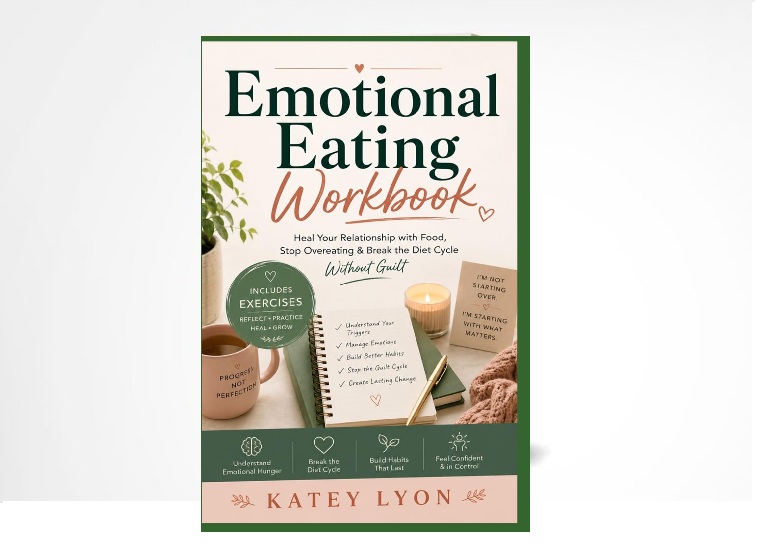
The Emotional Eating Workbook is a guided, step-by-step workbook designed to help you understand the patterns behind emotional eating and create healthier habits that last.
Journaling can also be a powerful tool for increasing awareness around eating habits, emotions, and triggers. You may find our article How a Food, Mood, and Exercise Journal Can Support Mindful Weight Loss helpful for understanding how self-reflection can support long-term behavior change.
Inside the Emotional Eating Workbook, you’ll work through eight practical modules:
Module 1: Why Diets Keep Failing
Understand the diet cycle, why willpower isn’t the problem, and how repeated dieting can keep you stuck in the same patterns.
Module 2: Physical Hunger vs Emotional Hunger
Learn how to recognize the difference between true hunger and emotional triggers so you can respond more consciously.
Module 3: Guilt, Restriction, and the All-or-Nothing Trap
Discover how guilt and perfectionism can fuel overeating and learn a more balanced approach.
Module 4: Identifying Your Personal Sabotage Patterns
Explore the hidden patterns and protective behaviors that may be keeping you stuck.
Module 5: Building Habits That Don’t Rely on Motivation
Create simple, sustainable habits that continue working even when motivation disappears.
Module 6: Eating Without Guilt
Practice letting go of food guilt and develop a healthier, more compassionate relationship with eating.
Module 7: Creating Your Personal Reset Plan
Build a practical plan you can return to whenever life becomes stressful or routines get disrupted.
Module 8: Staying Out of the Diet Cycle Long Term
Learn how to recognize early warning signs and maintain progress without relying on perfection.
The free sample of the Emotional Eating Workbook includes the introduction and the first module so you can explore the workbook’s approach before deciding whether the complete workbook is right for you.
The workbook is delivered as a PDF and can be printed for writing exercises, reflections, and personal planning.
Who This Is For
This free sample is for you if:
- You feel stuck in a cycle of starting and stopping
- Food feels emotional, not just physical
- Guilt shows up after eating
- Motivation disappears under stress
- You want change without punishment or perfection
You don’t need discipline.
You need understanding and support.
What This Is NOT (important trust builder)
This workbook is not:
- a diet
- a calorie tracker
- a quick fix
- a “perfect eating” system
There’s no pressure to change everything at once.
Get the Free Sample
Enter your email below to download the free sample of
The Emotional Eating Workbook.
You’ll receive:
- instant access to the PDF
- a calm introduction to the full process
- no pressure, no spam
Privacy Reassurance
Your email is used only to send the workbook sample and related resources.
You can unsubscribe at any time.
You don’t have to fix everything today.
You just have to start somewhere kinder.
Frequently Asked Questions
Is this a free sample of the full workbook?
No. The free sample includes the introduction and the first module so you can explore the approach before deciding whether the complete workbook is right for you.
Is this workbook a diet plan?
No. The Emotional Eating Workbook does not provide meal plans, calorie counting, or restrictive diet rules. Its focus is helping you understand emotional eating patterns and build healthier habits.
Who is this workbook for?
This workbook is designed for adults who struggle with emotional eating, overeating, food guilt, all-or-nothing thinking, or repeated cycles of dieting and starting over.
What is the difference between emotional hunger and physical hunger?
Physical hunger develops gradually and is satisfied by eating. Emotional hunger often appears suddenly, is linked to emotions such as stress or boredom, and may continue even after eating.
Can this workbook help me stop emotional eating?
The workbook is designed to help you better understand your triggers, eating patterns, and habits. By increasing awareness and developing practical coping strategies, many people find it easier to reduce emotional eating behaviors over time.