How Protein Helps You Lose Weight and Keep It Off: 5 Reasons
How Protein Helps You Lose Weight, you might have been wondering. When it comes to weight loss, there’s one macronutrient that stands out above the rest: protein. Whether your goal is to burn fat, build muscle, or simply feel more satisfied after meals, science consistently shows that protein plays a key role in achieving results. Here’s why it works so effectively.
How Protein Helps You Lose Weight
Let’s find out How Protein Helps You Lose Weight:
- Protein Increases Satiety and Reduces Cravings
Protein helps you feel full for longer because it slows digestion and influences hunger hormones like ghrelin and peptide YY. This means fewer snack attacks and less temptation to overeat. Studies show that higher protein intake can lead to a reduction in daily calorie consumption without conscious restriction. - Protein Preserves Lean Muscle Mass
When you lose weight, it’s not just fat you’re shedding — without enough protein, you also risk losing muscle. Protein provides the amino acids your body needs to maintain lean tissue, especially during calorie restriction. This is crucial because muscle tissue burns more calories at rest, helping you keep the weight off long-term. - Protein Has a Higher Thermic Effect
Not all calories are created equal when it comes to metabolism. The “thermic effect of food” (TEF) is the energy your body uses to digest and process what you eat. Protein has the highest TEF of all macronutrients — about 20–30% of its calories are burned just during digestion, compared to 5–10% for carbs and 0–3% for fats. - Protein Supports Stable Blood Sugar
Pairing protein with carbohydrates helps slow the release of glucose into the bloodstream, preventing spikes and crashes in blood sugar. This can reduce cravings and help control appetite throughout the day — a big win for weight management. That is How Protein Helps You Lose Weight - How Much Protein Do You Need for Weight Loss?
While needs vary based on age, activity level, and goals, most research suggests aiming for 1.2–2.0 grams of protein per kilogram of body weight when trying to lose weight without sacrificing muscle. Spread intake evenly across meals for best results.
Protein isn’t just for bodybuilders — it’s a powerful ally for anyone looking to lose weight, preserve muscle, and feel more energized. By increasing satiety, boosting calorie burn, and protecting lean mass, protein works with your body to make weight loss more sustainable.
If you want to maximize results, pair higher protein intake with whole, minimally processed foods and a balanced exercise plan that includes both strength training and cardio.
A high-protein diet can be especially beneficial for people with insulin resistance, as protein helps stabilize blood sugar levels and reduce post-meal glucose spikes. By replacing some carbohydrates with lean protein sources, such as fish, poultry, eggs, legumes, and low-fat dairy, the body experiences slower digestion and a lower glycemic response. This not only improves satiety—reducing cravings and overeating—but also supports muscle maintenance, which enhances insulin sensitivity over time. Additionally, higher protein intake can aid in weight management, a key factor in improving insulin function and reducing the risk of progressing to type 2 diabetes.
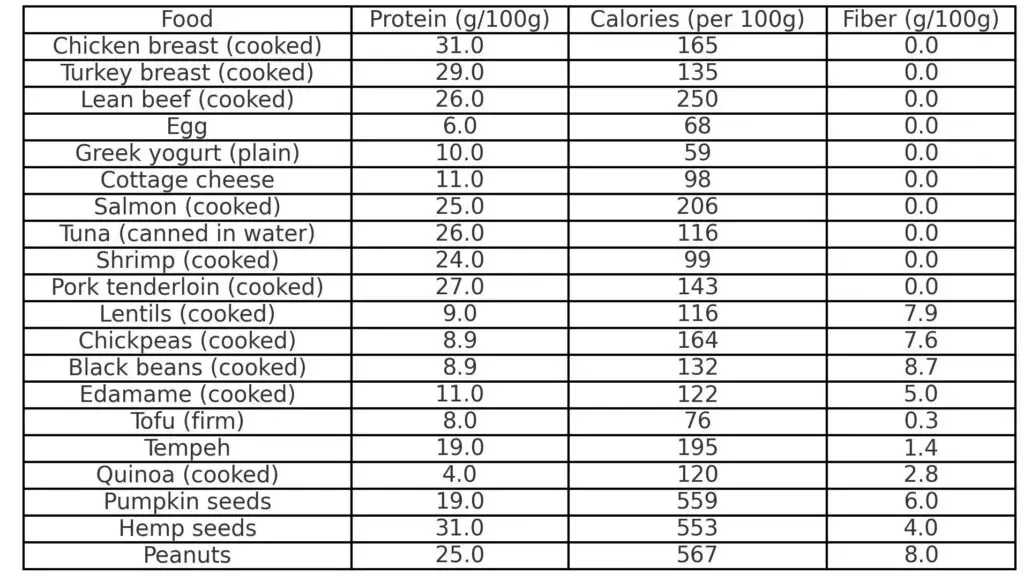
High-Protein Foods Chart with Calories and Fiber
Animal-Based High-Protein Foods
- Chicken breast (31g protein per 100g cooked)
- Turkey breast (29g per 100g cooked)
- Lean beef (26g per 100g cooked)
- Eggs (6g per large egg)
- Greek yogurt (10g per 100g)
- Cottage cheese (11g per 100g)
- Salmon (25g per 100g cooked)
- Tuna (26g per 100g canned in water)
- Shrimp (24g per 100g cooked)
- Pork tenderloin (27g per 100g cooked)
Plant-Based High-Protein Foods
- Lentils (9g per 100g cooked)
- Chickpeas (8.9g per 100g cooked)
- Black beans (8.9g per 100g cooked)
- Edamame (11g per 100g cooked)
- Tofu (8g per 100g firm)
- Tempeh (19g per 100g)
- Quinoa (4g per 100g cooked)
- Pumpkin seeds (19g per 100g)
- Hemp seeds (31g per 100g)
- Peanuts (25g per 100g)
Pro Tip: For best results in weight loss and muscle maintenance, spread your protein intake across all meals and combine plant-based and animal-based sources for variety, flavor, and a broader nutrient profile.
Related article: Want More Energy? These 8 High-Protein Foods Are a Must