Kimchi vs Sauerkraut: Which Is Better for Gut Health (+ Recipes)
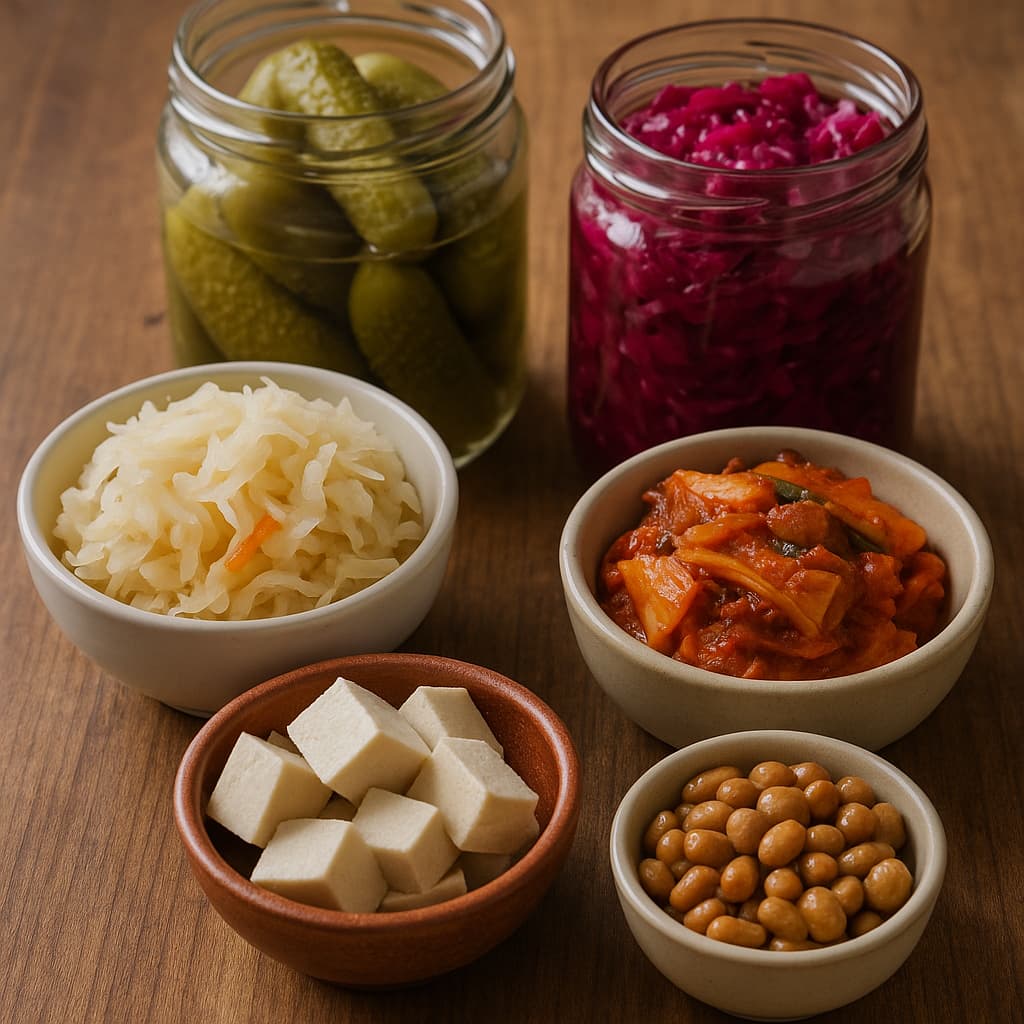
Fermented foods are taking center stage in the wellness world, and two of the most popular are kimchi and sauerkraut. Both are rich in probiotics, fiber, and vitamins — but which one is better for gut health?
In this guide, we’ll break down the differences between kimchi and sauerkraut, compare their benefits for digestion, and share two easy recipes so you can start adding them to your meals today.
If you’re new to fermented foods, start with our Fermented Foods: Beginner’s Guide + Free 7-Day Gut-Healing Meal Plan.
What Is Kimchi?
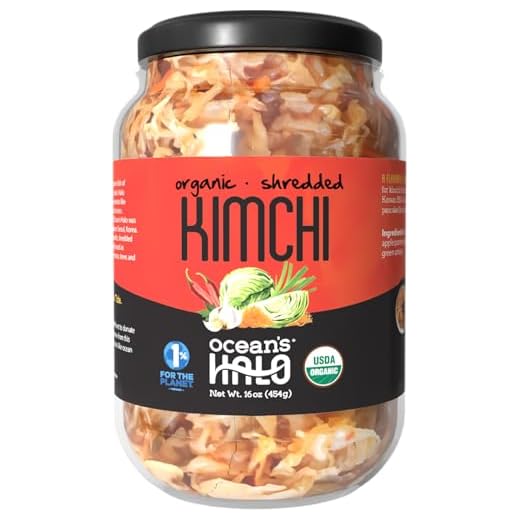
Kimchi is a traditional Korean dish made by fermenting napa cabbage and radishes with garlic, ginger, chili, and other spices.
- Flavor: Spicy, tangy, complex
- Nutrients: Vitamins A, C, K, folate, and antioxidants
- Probiotics: Lactic acid bacteria (Lactobacillus kimchii) support digestion
Kimchi is both a probiotic powerhouse and a nutrient-rich side dish.
What Is Sauerkraut?
Sauerkraut is a German dish made by fermenting finely shredded cabbage with just salt.
- Flavor: Sour, tangy, milder than kimchi
- Nutrients: Vitamin C, vitamin K, iron, fiber
- Probiotics: High in Lactobacillus plantarum and Leuconostoc species
Sauerkraut is simpler in ingredients, but equally effective in supporting gut health. Read more about Sauerkraut Serving Size for Digestion (+ Recipe)

Key Differences Between Kimchi & Sauerkraut
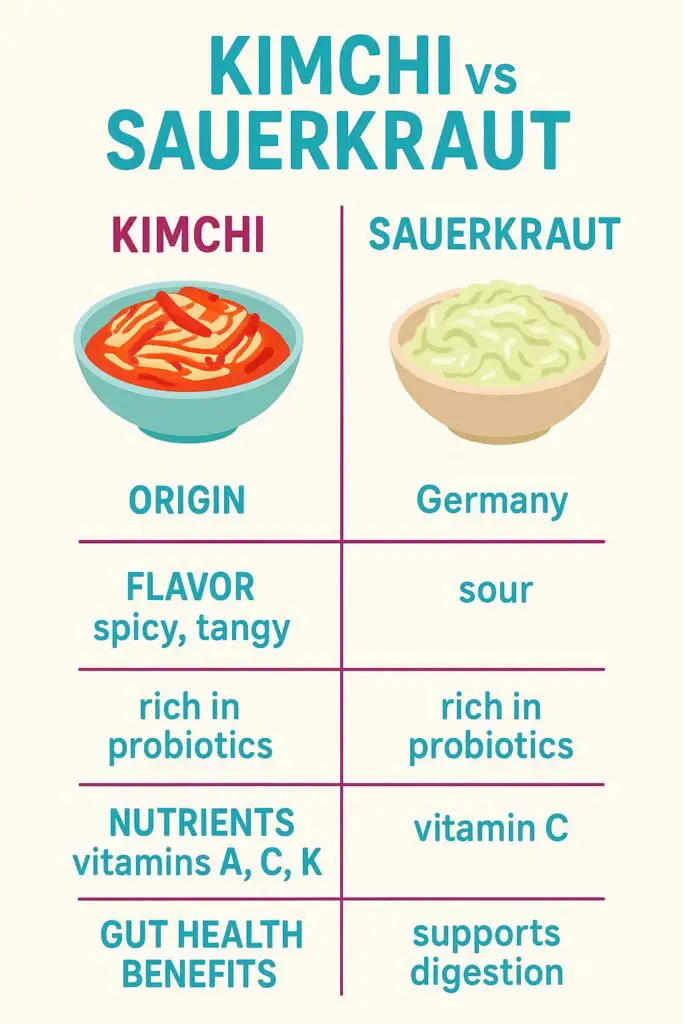
| Feature | Kimchi | Sauerkraut |
| Origin | Korea | Germany |
| Main Ingredient | Napa cabbage, radish, spices | Green/white cabbage |
| Flavor | Spicy, garlicky, complex | Sour, tangy, mild |
| Nutrients | Vitamins A, C, K, antioxidants | Vitamin C, K, iron, fiber |
| Probiotics | Wide range, incl. L. kimchii | High in L. plantarum |
| Sodium | Higher (due to spice paste) | Moderate |
Gut Health Benefits of Kimchi
- Diverse probiotics: Multiple strains improve gut flora balance.
- Anti-inflammatory: Garlic, ginger, and chili may reduce inflammation.
- Immune boost: Rich in vitamins A and C.
- Metabolism support: Some studies suggest that kimchi may help with weight control.
Gut Health Benefits of Sauerkraut
- Concentrated probiotics: Excellent source of L. plantarum, linked to digestion and immune support.
- High fiber: Promotes regularity and feeds gut bacteria.
- Vitamin C boost: Supports immunity and reduces oxidative stress.
- Easier to digest: Simpler ingredients make it gentler for sensitive stomachs.
Kimchi vs Sauerkraut: Which One Should You Choose?
Both kimchi and sauerkraut are excellent for gut health — but the best choice depends on your needs:
- Choose kimchi if: You want more diverse probiotics, antioxidants, and don’t mind spicy flavors.
- Choose sauerkraut if: You prefer mild flavors, need something gentler on digestion, or want a simple daily probiotic boost.
The best option? Eat both! Alternating them gives your gut a wider variety of beneficial bacteria.
Easy Recipes to Try
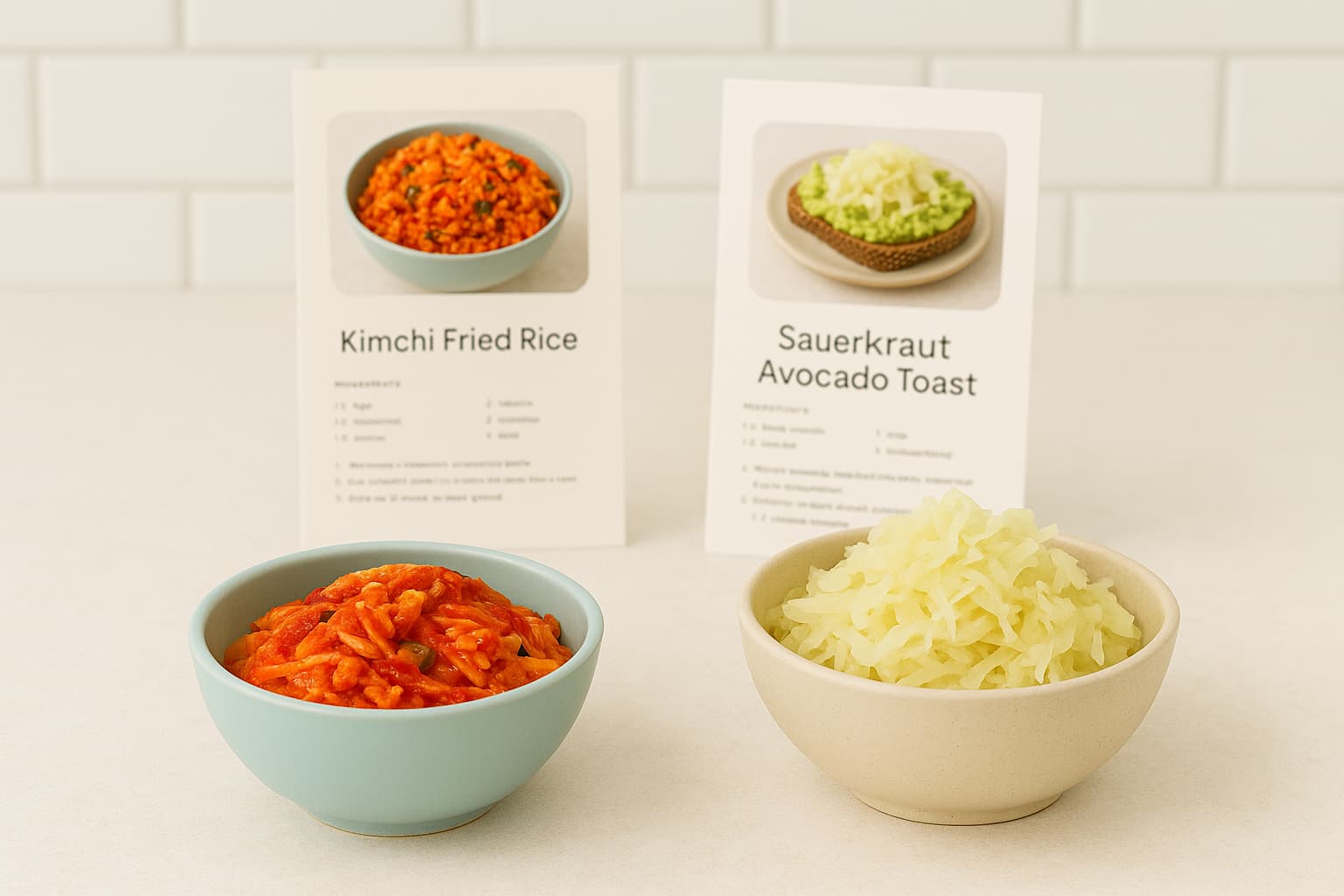
1. Kimchi Fried Rice (Quick & Gut-Friendly)
Servings: 2
Prep Time: 10 minutes
Cook Time: 10 minutes
Ingredients:
- 2 cups cooked rice (preferably day-old)
- ½ cup kimchi, chopped
- 1 tablespoon kimchi juice
- 2 eggs
- 2 green onions, sliced
- 1 tablespoon sesame oil
- 1 teaspoon soy sauce (or tamari for gluten-free)
- Optional: sesame seeds, seaweed flakes
Instructions:
- Heat sesame oil in a skillet.
- Add kimchi and sauté for 2–3 minutes.
- Stir in rice, kimchi juice, and soy sauce. Cook until hot.
- Push rice to one side, scramble eggs in the pan, then mix.
- Top with green onions, sesame seeds, or seaweed.
👉 Gut-friendly, spicy, and packed with probiotics!
2. Sauerkraut Avocado Toast (Simple & Nourishing)
Servings: 1
Prep Time: 5 minutes
Ingredients:
- 1 slice whole-grain bread, toasted
- ½ avocado, mashed
- 2 tablespoons raw sauerkraut (unpasteurized)
- 1 teaspoon pumpkin or sunflower seeds
Instructions:
- Toast bread until golden.
- Spread mashed avocado evenly.
- Add sauerkraut on top.
- Sprinkle with seeds for crunch.
A quick way to get your ideal sauerkraut serving size in one meal.
FAQs
Can I eat both kimchi and sauerkraut in the same day?
Yes! In fact, alternating gives you a more diverse range of probiotics.
How much kimchi or sauerkraut should I eat daily?
Start with 1–2 tablespoons, working up to ¼ cup per day.
Is store-bought sauerkraut or kimchi good for gut health?
Only if they are raw and unpasteurized (usually in the refrigerated section).
Which is lower in sodium?
Sauerkraut generally has less sodium than kimchi.
Final Thoughts
When it comes to gut health, both kimchi and sauerkraut are winners. Kimchi offers diversity and spice, while sauerkraut provides a mild, fiber-rich probiotic boost. Adding small daily servings of either (or both!) to your meals can improve digestion, immunity, and overall well-being.
If you’re new to fermented foods, start with our Fermented Foods: Beginner’s Guide + Free 7-Day Gut-Healing Meal Plan.